 English
 Čeština
Double Diamond framework
We're building a comprehensive knowledge library about product development as part of our mission. The library is for anyone looking to make better decisions — primarily decisions about how to further develop a product. Whether you're an inventor, a product manager, or a Chief Product Officer, using a structured decision-making method increases your chances of building the right things for the right audience (build the right thing for the right audience). Today we'll introduce the Double Diamond framework.
Framework name: Double Diamond.
Inventor: the British Design Council, for design.
Year first used: 2004.
Link to original research:
Key figures in developing the framework:
Richard Eisermann,
Lucy Kimbell,
Jonathan Ball,
Anna White,
Teresa Torres.
Key milestones in developing the framework:
Creation of the case study titled 11 Lessons: A Study of the Design Process,
Improving the framework for strategic management and creating a framework for innovation,
Expansion of the framework into the service sector by Lucy Kimbell, Rethinking Design Thinking (2011),
Creation of a systemic design framework for complex projects (2021).
History of First Use
The Double Diamond framework is a set of innovation techniques originally created for the strategic management of design, introduced in 2003 by the British Design Council as part of its effort to improve design management. It wasn't an innovation in the sense of something groundbreaking, but rather a way to better communicate and standardize thinking in the design world, based on an analysis of many of the approaches in use at the time.
How It Works
The basic principle is the "divergence–convergence" process (that is, a phase of divergent thinking followed by a phase of convergent thinking). It's a thought process in which we alternate between broadly focused thinking and narrowly defined thinking.
Because it's an innovation framework, there's no best or worst option within it. When deciding which problems or solutions to focus on, the authors rely on various research and prioritization techniques.
The process uses so-called diamonds, with each diamond serving a different purpose. The goal is to move through the process from left to right in a linear way.
First diamond = understanding the problem we want to solve, and defining it.
Second diamond = exploring different perspectives on the defined problem, and delivering a solution.
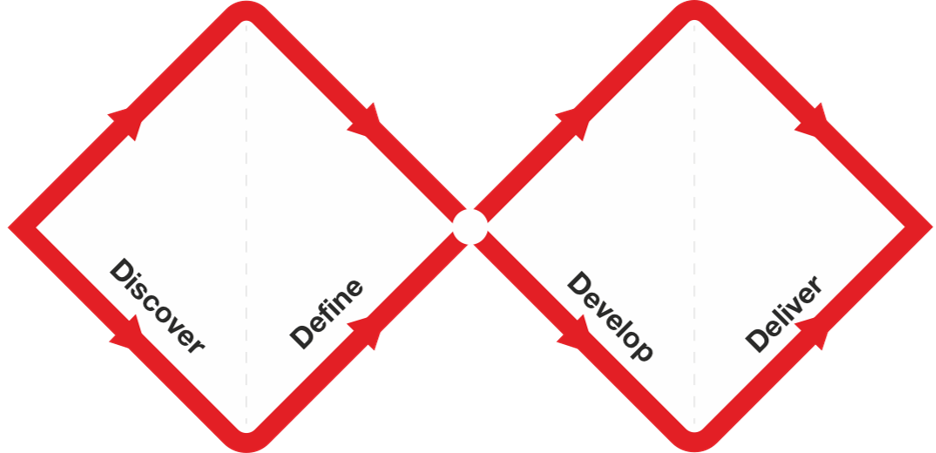
Graphic representation of the Double Diamond framework
The First Diamond
This diamond focuses on finding and clearly delineating the problem we want to solve.
Discover
The discovery phase helps you understand what problem you're solving. Observation is a key element. Depending on the nature of the problem, we choose different observation techniques. The goal is always to understand as broadly as possible (discover) how users, customers, or other subjects under study operate — ideally without our intervention.
We use divergent thinking, in which the original problem under study gives rise to a broader spectrum of problems, solutions, questions, options, attitudes, and different angles on the matter. Nothing is off-limits.
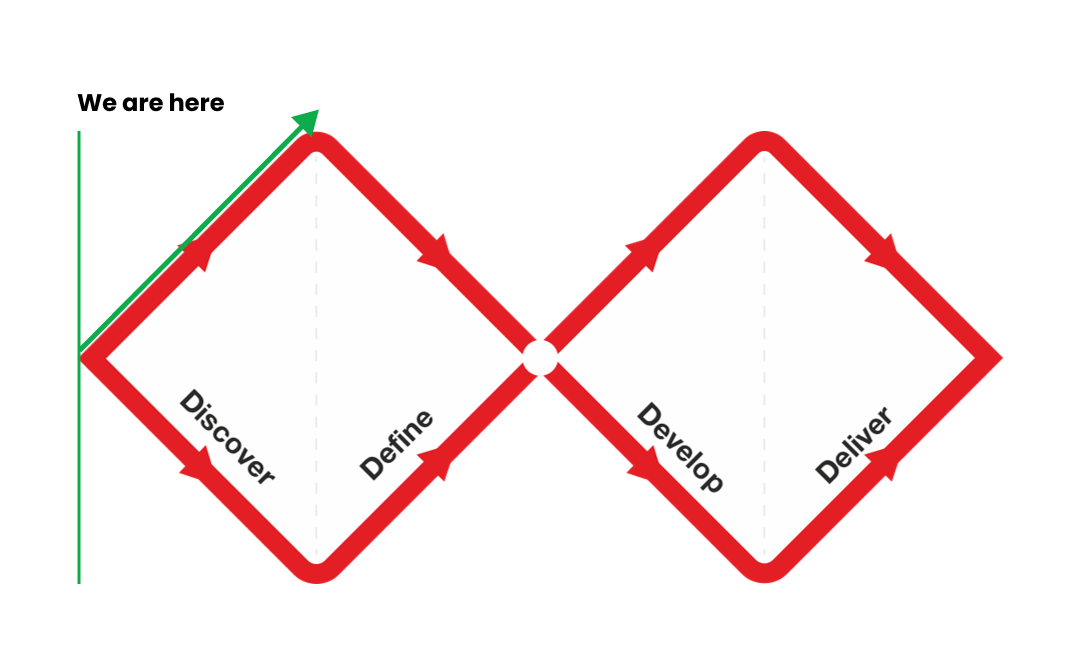
Double Diamond discovery
Define
The phase of precisely defining the problem is a phase of convergent thinking. We work to synthesize all the insights from observation and to define the specific problem we want to find a solution for. The word specific is key here — the more specific the problem, the easier it is to find a solution.
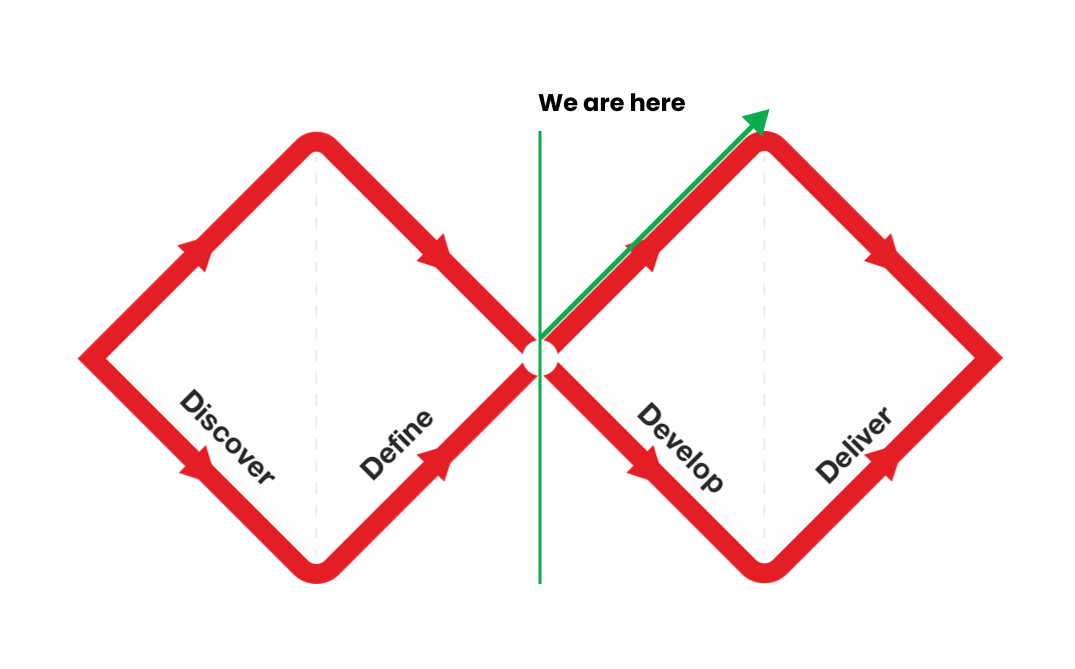
Double Diamond define
The Second Diamond
This diamond focuses on finding a solution to the problem we defined earlier.
Develop
Develop is another phase of divergent thinking. This time it's focused on finding possible solutions to the problem, different angles on those solutions, and scenarios and commentary on them. We often look for inspiration from other fields and brainstorm how best to solve the problem.
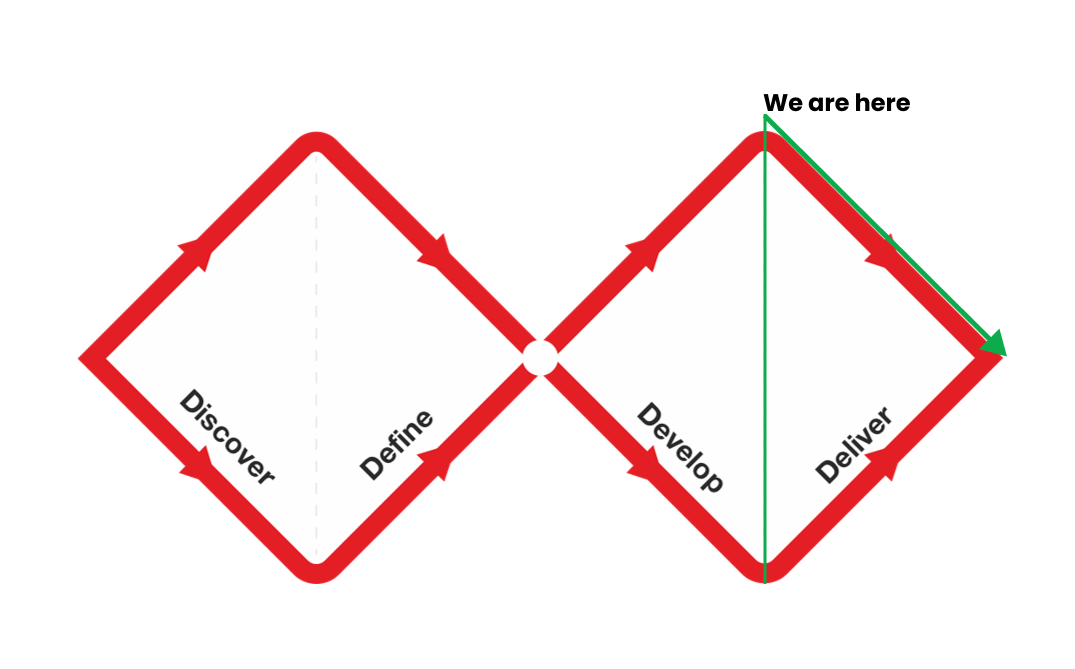
Double Diamond develop
Deliver
The final phase is actually testing the selected solutions to the problem and finding the one that solves it best. This is the last phase of convergent thinking, where we synthesize the insights from the previous step and look for one specific thing — one solution — that best solves our narrowly defined problem.
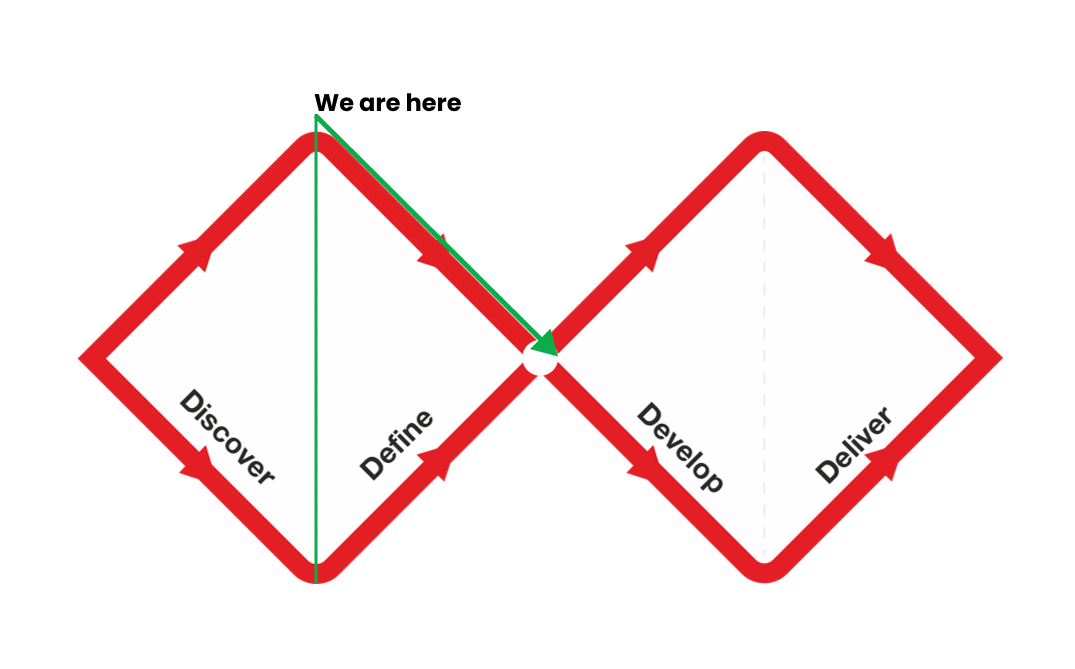
Double Diamond deliver
A Worked Example
The Double Diamond represents a way of thinking focused on finding a solution to a particular problem — including defining that problem. Separating the problem from the solution is key here. The framework has four phases in total, which the solver moves through step by step.
Discover
Topic: People try to live a "digital free" life, but often fail. Why?
Digital habits are deeply ingrained. Using technology has become automatic behavior, much like reaching for the phone without a conscious decision.
The digital environment is designed to be addictive. Apps and platforms use behavioral design that increases dependency.
Social pressure and FOMO (fear of missing out). People are afraid that without technology they'll lose touch with those around them, their friends, or their work environment.
The psychological angle. Dependence on the dopamine rewards from notifications and interactions.
The social angle. Digitalization is a social standard, and disconnecting means social isolation.
The economic angle. Companies have an economic interest in keeping users online.
What's the real motive of people who want to be "digital free"?
What does "digital free" specifically mean to them?
What situations or contexts lead them back to technology?
Define
The problem is that people try to cut back on their use of digital technology without having a clear strategy, support from those around them, or a realistic alternative to digital life.
Develop
A personal digital audit:
People first map out where, when, and why they use technology. Using simple tools or a journal, they can track their digital time and recognize which activities bring them value and which only kill time.
Goal: raise awareness of one's own digital behavior as a basis for meaningful change.
The concept of "Digital Balance" instead of "Digital Free":
Instead of extreme disconnection, people learn to consciously balance online and offline activities. For example, they can set rules (e.g. "no phone after 9:00 PM" or "offline weekend") and adjust them to their needs.
Goal: support a sustainable balance instead of unrealistic total disconnection.
Community challenges and social support:
Creating a community program or app where people can share experiences, set shared challenges, and motivate one another.
Goal: reduce social pressure and reinforce the feeling that they're not in it alone.
Deliver
The developed idea of a "digital bank":
The goal is to help people build a personal strategy for managing their digital time, while also offering them community support and a realistic alternative to constant online life.
The digital bank works as a tool that helps the user consciously manage their digital time, much as a financial bank helps manage money. The user thus gains a clear overview, control, and motivation to change.
How it works:
The user sets a personal digital budget — how much time they want to spend online and in which areas (work, entertainment, social media, education).
The app automatically tracks their activity and displays an "account statement," where they can see how much time they're "spending" and where.
If they stay within the limit, they earn digital savings, which they can "invest" in offline rewards (e.g. time for themselves, hobbies, rest).
Every user has access to a community space where they can share strategies, successes, and tips with others.
The app also helps with personal strategy, recommending small steps and offering realistic alternatives — e.g. offline activities, mindfulness exercises, or local events.