_edited.png)
Cost of Delay framework
- Tomáš Veselý - podpořen AI

- 26. 10. 2025
- Minut čtení: 2
Aktualizováno: 3. 11. 2025
Tvoříme obsáhlou knihovnu znalostí o produktovém vývoji jako součást naší mise. Knihovna slouží všem, kteří se snaží zlepšit v rozhodování, především v rozhodování o dalším rozvoji produktu. Ať už jsi vynálezce, produktový manažer nebo Chief Product Officer, používání určité rozhodovací metody zvyšuje šanci na vytvoření správných produktů a jejich funkcí pro správné publikum (build the right thing for the right audience). Dnes si představíme Cost of Delay framework.
Název frameworku: Cost of Delay.
Vynálezce: pro produkt Don Reinertsen.
Rok prvního použití: 1997.
Odkaz na původní výzkum:
Kniha Managing the Design Factory (1997),
Kniha Developing Products in Half the Time,
Kniha The Principles of Product Development Flow (2009).
Důležité osobnosti v rozvoji frameworku:
Dean Leffingwell.
Důležité milníky v rozvoji frameworku:
Přidáno do Cost of Delay Devided by Duration frameworku,
Přidání do WSJF,
Přidáno do SAFe a adoptováno ve větších organizacích.
Kontext prvního použií
Cost of Delay je metoda pro odhadování, kolik nás stojí zrychlení vývoje produktu nebo funkce. Její vynálezce Don Reinertsen byl během své konzultační kariéry neustále dotazován, aby zrychlil produktový vývoj, protože si to jeho klienti přečetli v magazínu jako dobrý nápad. Jeho odpověď klientům byla: „Proč to chcete zrychlit? To je těžký úkol. Víte, kolik budete vydělávat, když zrychlíte vývoj?“ Klienti to nevěděli, a proto přišel s metodou Cost of Delay, aby jim to ukázal.
Základní princip prioritizace
CoD, neboli anglicky Cost of Delay, vyjadřuje, kolik peněz ztrácíme za každý časový úsek, kdy ještě produkt nebo funkce není doručena. Jedná se o metodu prioritizace založenou na peněžní hodnotě času.
Velikost = počet měsíců pro dokončení funkce/produktu.
Peněžní ztráta = odhadovaná finanční ztráta za jednotku času, kdy funkce nebo produkt není používána zákazníky, protože ještě není vytvořena.

Nejvyšší hodnoty představují největší ztrátu, a tedy i nejprioritnější produkty a funkce. To samo o sobě lze použít jako jednoduché pravidlo pro prioritizaci.
Nicméně častěji se používá metoda Cost of Delay Divided by Duration (CD3).
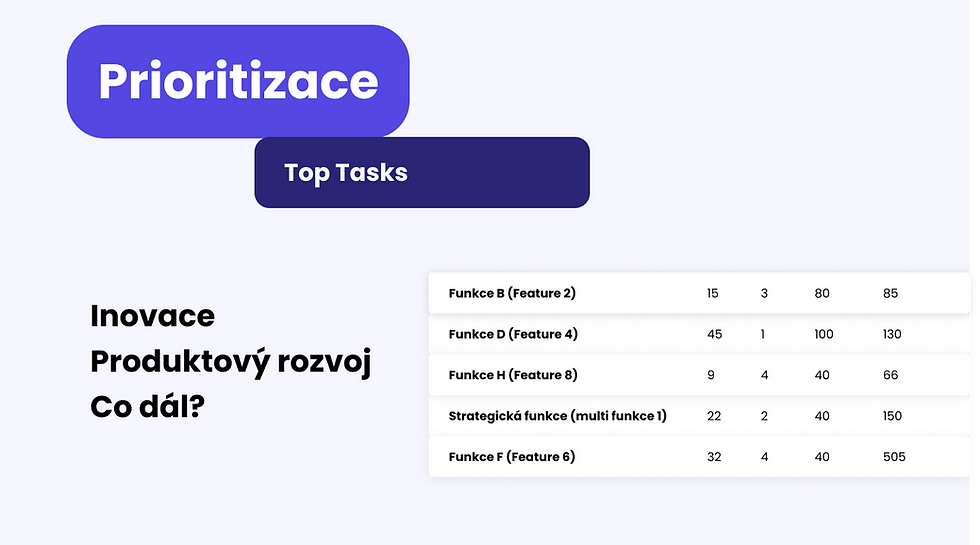
Ukázka prioritizace
Je nutné odhadovat v penězích a časových jednotkách pro potřeby porovnání.

Velikost
Příkladem může být 5 měsíců, 6 týdnů nebo 8 MD
Peněžní ztráta
Příkladem může 50 00 Kč, 400 000 EUR.

Komentáře