 English
 Čeština
AI Agents Autonomy Matrix framework
When May an AI Agent Act?
We're building a comprehensive knowledge library about product development as part of our mission. The library is for anyone looking to make better decisions — primarily decisions about how to further develop a product. Whether you're an inventor, a product manager, or a Chief Product Officer, using a structured decision-making method increases your chances of building the right things for the right audience (build the right thing for the right audience). Today we'll introduce the Agent Autonomy Matrix.
Framework name: Agent Autonomy Matrix.
Inventor: HubSpot.
Year of first use: 2026.
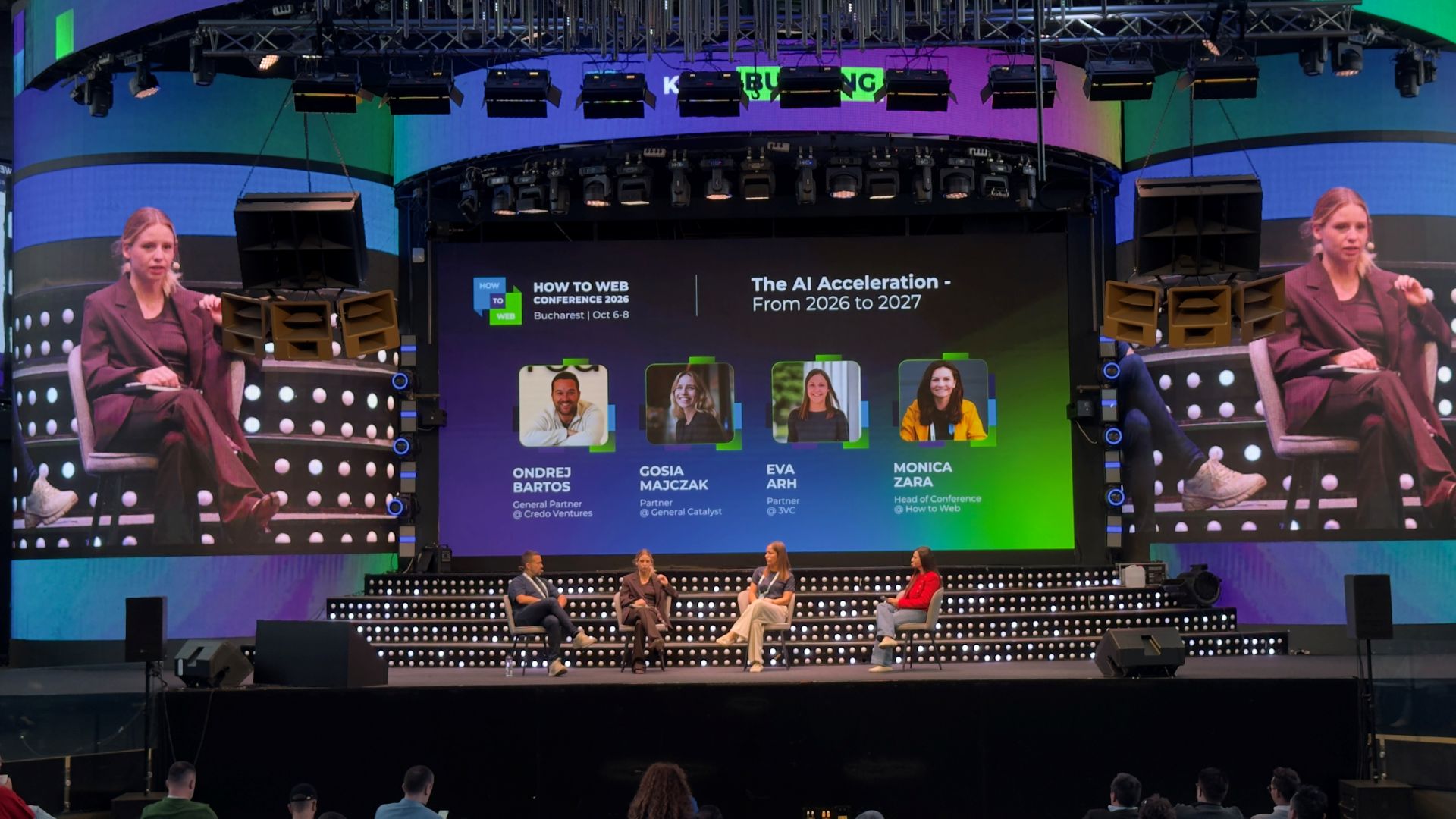
Link to the author's original research: Talk: Agent-First, Human-Led: Building Autonomous Growth & Retention Engines (How to Web 2026, Bucharest). The matrix itself is not published online.
Key figures in the framework's development:
Amine Ben Cheikh Brahim, Solutions Architect Team Lead, HubSpot.
Key milestones in the framework's development:
Jeff Bezos splits decisions into Type 1, irreversible one-way doors that deserve slow deliberation, and Type 2, reversible two-way doors that should be made quickly, in his 2015 letter to Amazon shareholders.
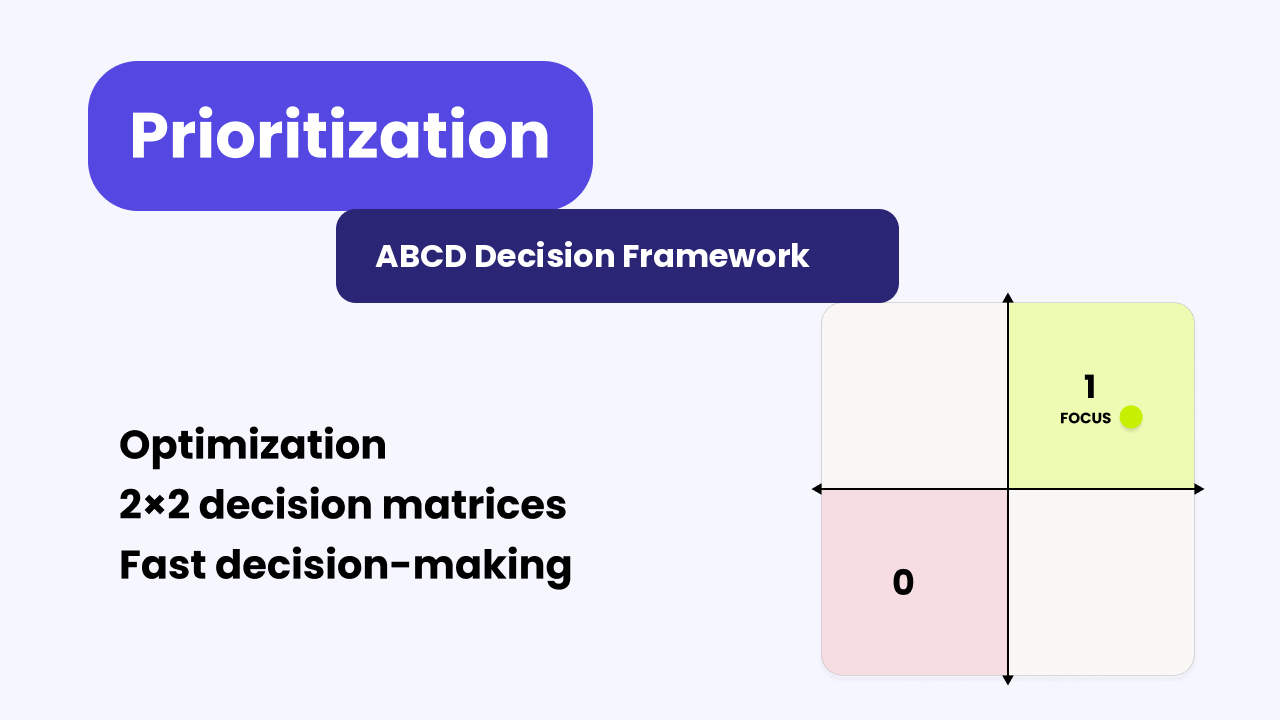
McKinsey publishes the ABCD decision framework in Untangling your organization's decision making, a 2×2 that sorts decisions by scope and frequency and notes that parts of delegated decisions can go to AI.
HubSpot presents the matrix at How to Web in Bucharest as part of its playbook on AI agents.
History of First Use
We first saw the matrix at How to Web 2026 in Bucharest, in the talk Agent-First, Human-Led by Amine Ben Cheikh Brahim from HubSpot. It is part of HubSpot's playbook on AI agents, and HubSpot uses it internally to decide where to put agents in its own work.
The question behind it is new for most product teams. AI agents can now send emails, change data and spend money. So the question is no longer "can the agent do this?" but "may it?"
The matrix builds on McKinsey's ABCD decision framework, which sorts decisions by how big they are and how often they come up. HubSpot took the same 2×2 and asked one thing about every task: how much can we let the agent do on its own?
Basic Prioritization Principles
The core idea of the matrix is to decide how much an AI agent can do without human oversight, and when it must hand the work over to a person or not act at all. It helps us to understand how to implement AI decision-making technologies into everyday tasks such as marketing inbound.
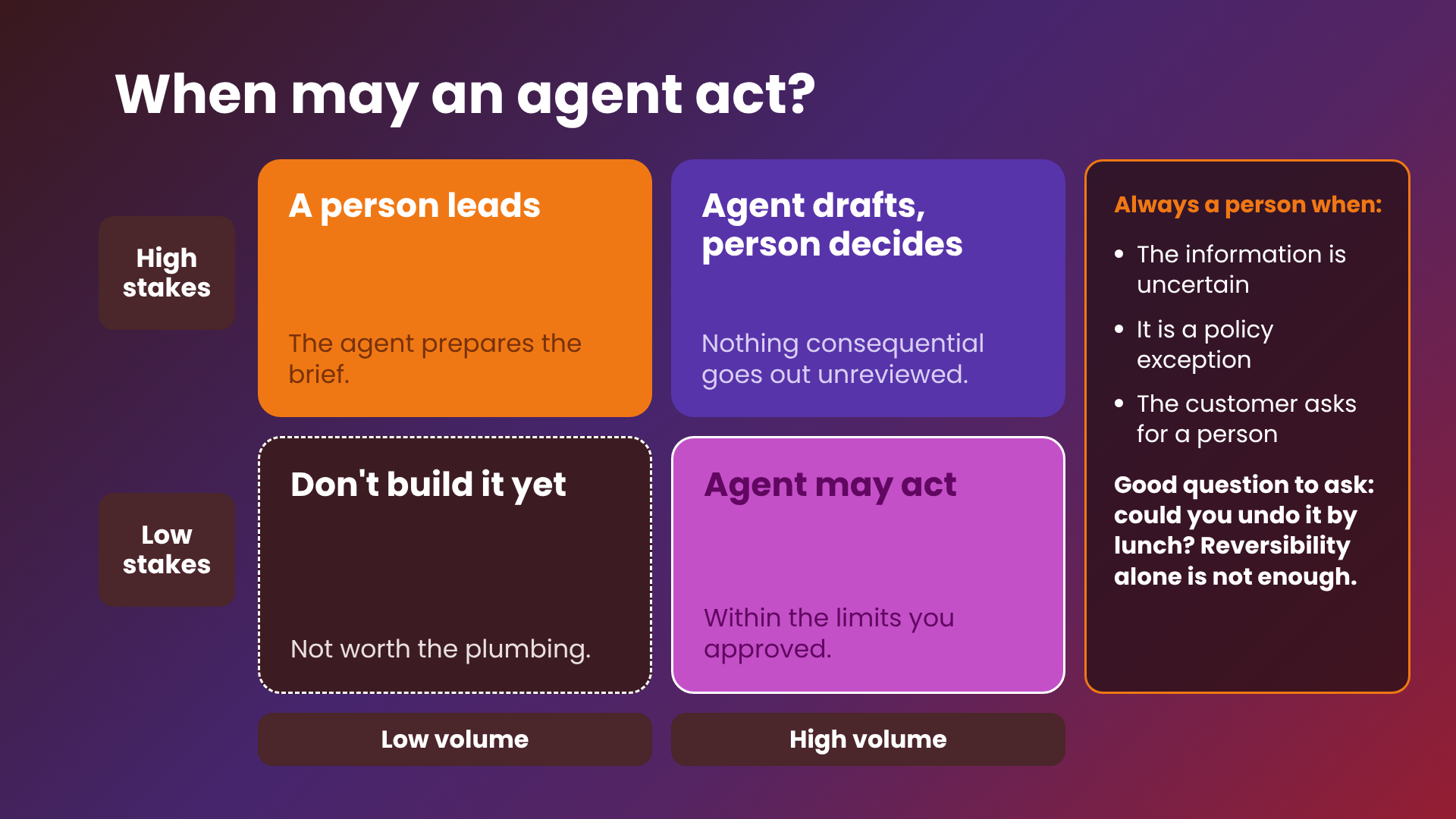
The matrix has two axes and four quadrants that represent four ways AI agent can act:
Stakes of the requests = the Y axis represents risk. It shows what a wrong action costs for example a retention or lawsuit.
Volume of requests = the X axis shows how often the task which we are automating occurs. Volume decides whether building an agent is worth it at all.
Two rules sit behind the whole matrix:
Stakes decide who approves. The higher the stakes, the more a person stays in control.
Volume decides whether to build. Rare tasks rarely pay for the setup, testing and monitoring an agent needs.
Some cases always go to a person. Here are some good examples:
When the information is not clear to reasoning machine.
When the action itself is a policy exception.
When the customer specifically asks for a person.
A good question to ask is whether you could undo the action by lunch or not. It not, it is usually one way decision which needs human oversight.
Quadrant I: Agent Drafts, Person Decides
The "top-right" quadrant represents tasks where AI agent drafts proposals and person decides. Those tasks are usually high stake and risky decisions that happened relatively frequently high volume. There are too many of them to do by hand, but they are too risky to decide outcome automatically. The AI agent prepares the full action hand-off to a person who approves, edits or rejects it.
Quadrant II: A Person Leads
The "top-left" quadrant represents category of tasks where a person leads. Those tasks still have high stakes but low volume. These are rare decisions that can hurt the business if they go wrong. The agent prepares the brief. The agent prepares the brief. Here the agent works as a data companion. It gathers raw data and helps the person reason through it, but it does not propose options. A person decides and acts.
Quadrant III: Don't Build It Yet
The "bottom-left" quadrant represents don't build it yet category. Tasks that sits in this category have low stakes and also low volume. They are rare and cheap to get wrong and cheap to fix. So the cost of automating them only adds complexity to the work. Do these tasks by hand and revisit the decision if the volume grows.
Quadrant IV: Agent May Act
The "bottom-right" quadrant represents AI agent may act. This category of tasks have low stakes and high volume. These are routine tasks where a mistake is easy to fix but the volume is hard to manage by single human worker. The agent acts on its own within the limits you approved.
Prioritization Example
Quadrant I: Agent Drafts, Person Decides
Refund replies.
There are many of them and the company owns every word, as Air Canada learned in court.
Quadrant II: A Person Leads
Legal contracts approval and review.
Clayton Utz used AI to review 34,000 court documents, with lawyers verifying evidence and making final decisions.
Quadrant III: Don't Build It Yet
Quarterly export of price data to partner team.
Quadrant IV: Agent May Act
Expense coding at Ramp. The accounting AI agent codes card transactions on its own and 98 percent of those it marks as ready sync with no later changes, while people review only the transactions it flags.